Question Life Experience

November

Yes Sir, Captain Tightpants
Joined
Jan 20, 2008
Messages
13,184
Location
Australia
Sineya
There are a number of members on this board with some amazing life experiences and stories to share. Anyone care to share some of their defining life moments? Or even just some fun life stories?

*lights the campfire

I have been talking a lot lately to my elderly neighbours and realise how lovely their lives have been - I have so much to learn from them! This year I will be actively trying to move away from those who have limited life experience and seeking the people who have lived awesome lives to learn from.

I recently had a friend visit, and it made me realise that I had surrounded myself with rich kids that are fully provided for by their parents, living under their roofs still in their 30's, never worked more than casual hours and still have no inkling of what it is like to live and manage a life and home out from under the parents wing. This is my fault for staying in contact with those who have no desire to move on. I do, so, share some stories, the things that have shaped your life to make you the wonderful and happy humans you are today! Please?

*roasts marshmellows for all
 
The favourite memory I have was from the latter half of the 1970's when I was a Ghost Hunter. My best experience was at Berry Pomeroy Castle in South Devon, near the town of Totnes. I had gone there hoping to see the Blue Lady but I did much better, I saw the ghost of the White Lady and her doppelganger.
 
The CTC Spacecraft


Even if it has been a bad day, whenever I walk past the automotive paint section at Canadian Tire, that large rack of rattle-can aerosol paints, it always makes me smile. Many years ago, an organization I was with bought a case of twelve cans of Canadian Tire exhaust pipe enamel and sent it 22,000 miles away. If you are wide awake, you will realize something:

It is no longer on this planet.

I was called in to do two hours’ work on a proposal one winter Saturday at 9:00 AM – that miserable unpaid work that engineers have to endure in certain companies. But by the time I left at 11:00 AM, the story I had heard made the day worthwhile.

Several years before, we had been working on the Communications Technology Satellite, CTS, later renamed Hermes when it was launched on 27 Jan 76. I was on that program for three and a half years and I will definitely miss some aspects of it. The craftsmanship was one: our component quality engineer once showed my a circuit board and asked what I thought of it. I thought the solder joints had too little solder on them. He said, "Look at it through this eye loupe and see what you think." The solder fillets went halfway up the leads of the gullwing circuit leads. He continued, "You will never see a better soldering job than that." That was in 1976 and what he said was true - I have never seen craftsmanship like that again (or I should say craftswomanship) - the three women qualified for this job were like gods in the industry. While I was working on that proposal, I heard the real truth about how some other things were put together.

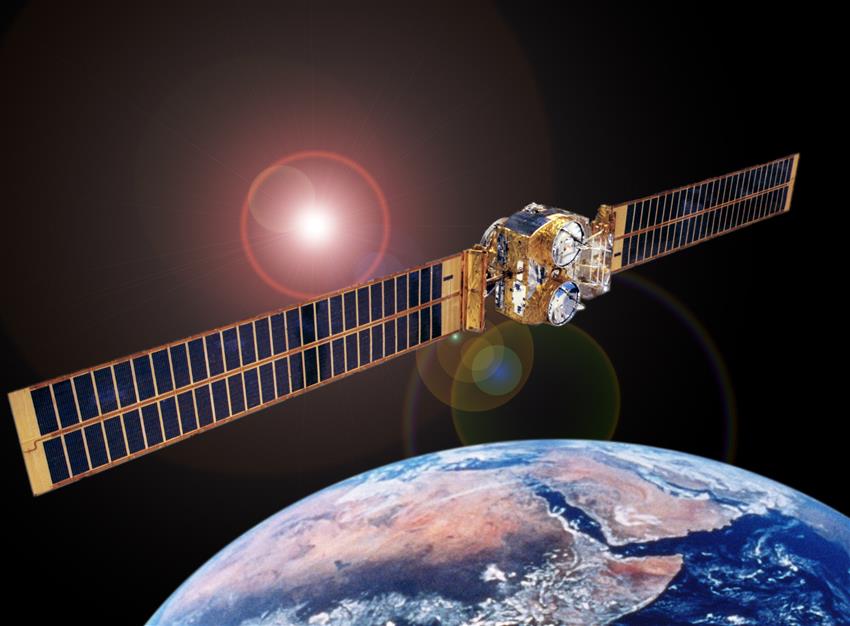
CTS was the first synchronous communications satellite with 200 watts output, so it could be received with an 8-foot diameter antenna. Modern satellite TV users have a 20” dish, but before CTS, you needed a 30-foot diameter radio telescope antenna – not the thing for consumers. CTS was designed to broadcast into communities in the far north where the receiving antenna could be hauled up on the back of a pickup truck.
hermes-01_hr.jpg


It was parked at 119 degrees west at synchronous altitude. To get there, it was launched on a Thor-Delta rocket with the Thor stage taking it to a low orbit of 120 miles and the Delta stage sending it into an elliptical orbit between 120 miles and the synchronous altitude of 22,236 miles. At the apogee, a solid-fuel rocket on the satellite itself burned for 28 seconds to circularize the orbit and bring the speed up to the synchronous speed of 6877.8 mph. Starting at a low orbit speed of 17,000 mph, the speed at the apogee is 3777 mph and for a 28-second burn, the acceleration is 110.74 miles per hour per second.

This was getting pretty close to the limit for the Thor-Delta. It can lift 1550 pounds into synchronous orbit and the satellite was slightly over 1500 pounds. The rocket on board the satellite was the most beautiful piece of spun stainless steel I have ever seen. It had a large combustion chamber about 4’ diameter narrowing down to a convergent-divergent nozzle and the whole piece of metal stood about 4’ high. It was 0.100” thick and this had raised a concern: toward the end of the burn that the nozzle would distort due to the heat and the satellite would not be able to reach synchronous speed. The rocket engine in the satellite was 723 pounds of which 692 pounds was propellant.

Someone suggested the simple idea that painting the outside surface of the nozzle with a flat black paint would enable it to radiate enough heat to retain its shape, so we contacted a supplier of space-qualified paint. Now it should be noted that satellites are trailing-edge technology. Nothing new ever goes into a spacecraft without an arduous testing process. Everything has to have an established reliability and preferably years of use before it can be put on a spacecraft. Every part, chemical or process has to be qualified by being subjected to rigourous qualification, or “qual” testing and until the entire suite of tests was over, it was never a slam dunk; parts could pass or fail qual. A few companies specialize in space-qualified parts but normal military testing (as done back in the 1970’s) was usually sufficient if the highest grades of components were used. (Nowadays, most satellites are built with commercial parts – but it was unthinkable then to risk a $60 million launch on parts with no history.) Anytime you wanted to add anything to the list of qualified items, you had to fill out a NONSPAR – a non-standard parts approval request and NASA would pass judgment on it. That was an arcane process that kept us on tenterhooks until it was complete.

We called up one supplier of space-qualified paint and his reply was, “Sure, we can give you immediate delivery. How many tank cars do you want and where is your railway siding?”

So we found a polite way to tell him no and called another supplier, who said, “Pints and quarts, sure, no problem. Fifteen months delivery.” This meant they had not qualified or even formulated the paint yet and there was a definite possibility that the paint would fail qual and leave us with nothing.

So one of our engineers came up with an obvious idea – what about automotive exhaust pipe enamel? We went to the nearby Canadian Tire store at Dufferin and Castlefield in Toronto and bought a case of 12 cans (which were $2.67 a can at the time). Canadian Tire Corporation is a unique company that has stores the size of a Home Depot that sells everything for cars, gardens, sporting goods and a lot of other indispensable stuff. We did not use the spray nozzle on the can – that would be too ghetto for any spacecraft – we had a very good De Vilbiss spray system, similar to what would be used for refinishing a car. We established that the paint had to be really roasted onto the metal at high temperature or it would not adhere. But once it was baked on, the adhesion was great. It would not flake or chip when tested for scratch resistance or discolouration under salt spray, the bane of anything stored near the ocean at Cape Kennedy.

Canadian Tire exhaust pipe enamel was qualified and flown on the CTS spacecraft. But before that, we had the problem of writing up the NONSPAR. We used the stock number which at the time was three numbers followed by a dash and three more numbers and listed it as “Paint, CTC Corporation” in the description and we buried it among other chemicals we were getting approved. NASA didn’t ask any questions. We certainly didn’t volunteer any information. According to the rules, only the paint from that particular case was qualified – approval is granted only for a certain manufacturer and run and there was no way to determine if any other paint was the same formulation or even came from the same company, since it is a private-label brand.

But in a world where product quality is a sore point for buyers of many items, isn’t it nice to know that you can purchase space quality products without even knowing it?
 
You will notice a couple of problems in the picture above:

1. The sun is behind the panels containing the solar arrays. Each panel is about 21 feet long and 6 feet high and there is a total of about 30,000 square inches of 1-inch square solar cells.
2. The spacecraft is shown over east Africa and it was never at synchronous altitude with the solar arrays extended at that longitude.
 
November
November
Wow :) Thanks!
There are always more stories to tell:

Hermes Post-Launch

Apogee motor firing went off perfectly and the satellite remained in its position at 119° west synchronous orbit as planned. CTS remained in service from the launch date of 26 Jan 76 until its demise due to earth sensor failure on 24 Nov 79. Since it had a planned two-year lifespan, the project was a success. That doesn't mean everything went smoothly. We had some component failures which were mitigated by redundant systems.

You have to understand the psychology pre-launch. To a man, all of us were saying, “I hope it blows up on the (launch) pad.” None of us had any confidence that his own system was ready for prime time.

The earth sensors were linear photodiode arrays which were part of an optical train that included a mirror mounted on flex pivots (crossed leaf springs that formed an "X" shape) with the mirror pivoted and vibrating at 4.4 Hz. Today we have area sensors for cameras and cell phones but that is now - these things did not exist then. The length of the earth was known in pixels so the prime earth sensor built up a measurement in the direction of vibration (along the equator) had a less accurate measurement was in the latitude direction based on the total length of the image. The start of the bright area was one edge of the earth and the end was the other, so the prime earth sensor had very good accuracy and resolution in the longitude dimension and not so much in the latitude dimension. Someone had the bright idea that the flex pivots would possibly be a problem, so the redundant earth sensor was mounted at right angles, so the flex dimension corresponded to latitude and the image size dimension corresponded to longitude. It was an inspired decision – the prime earth sensor failed due to flex pivot breakage immediately after takeoff and we ran on the redundant sensor until it failed due to flex pivot breakage on 24 Nov 79. Within five minutes on its final day, the main antenna had drifted out of reception range and we were left to communicate via the omnidirectional TT&C (telemetry, track and command) system. But with the 1200-watt solar arrays moving out of alignment with the sun, the main 200-watt transmitter was shut down for the last time.

This wasn’t the only problem. In synchronous orbit, you run into at least partial eclipse 84 days of the year and full eclipse 72 days of the year. Since we launched in winter, we didn’t see any effect until a couple of months later when we got the word: the prime power converter had failed. The solar arrays were two fan-folded structures about 21 feet long on each side of the spacecraft. They were carefully designed so that all magnetic torques were balanced and they were gathered in series-parallel into 78-volt buses to feed the converter. When a solar cell gets cold, the voltage goes up and it appears that just before the failure, the array output reached 130 volts. The arrays were being cooled to -50°C in eclipse. From that time on, we went with the redundant power converter and shut the array output off for about eight minutes after coming out of eclipse. The electronics could run off the battery supply for another few minutes per day and the array had warmed to an acceptable temperature (and voltage) by then.

On day 100, I was met at the door as soon as I walked into the building. A colleague said, “We went into AFP last night.” This was chilling news for me. Backing up a bit, I was REE (Responsible Equipment Engineer) for the Attitude Control Electronics Assembly. For political reasons, we had to break a cardinal rule of spacecraft: “You never buy a guidance system – ALWAYS build it”. Being REE is the same as being the goalie in hockey – you are the last line of defense against a bad design. And RCA had done bad designs, so bad that we forced them into two intermediate design reviews between PDR (preliminary design review) which is approval of the conceptual design and CDR (critical design review) which is the authority to begin build of the qual units. I was blissfully unaware of the political and career carnage my design reviews had caused, but they had saved a lot of schedule by making sure everything sailed through qual without a hitch. One of the things added to the guidance system was an AFP (automatic failure protection) mode where the pitch momentum wheel was held at constant speed and reaction control thrusters were shut off if anything drifted too far off course or telemetry found a problem. If you went into AFP, something was very wrong. We were on tenterhooks for hours as the news slowly trickled in: an experimental solar array section had blown out and the force was enough to throw the spacecraft off alignment. BIG SIGH OF RELIEF! We powered the attitude control electronics back up and it acquired earth and remained stabilized for the rest of its life.

******************

There are days when you make minor mistakes. There are days when you make major mistakes. But when you want to make gigantic mistakes, a space program is the place for you:

Stabilization Failures:

When I worked at Spar Aerospace, we had consultants in on a long-term basis from Lockheed Missiles and Space Company who were the experts in the field of three-axis stabilized satellites to help us with the Hermes satellite that was launched successfully in Jan 76. After all, LMSC had actually put some up that worked and that put them ahead of anyone else. On the last day one of the consultants was there, we took him out to the local pub (the other one was a holy roller who kept a Bible prominently displayed on the upper left corner of his desk and would never be caught dead in a pub).


1. The first satellite was a spin-stabilized one. There are solar cells all around so as it spins, there is no need to point an array – but only the equivalent diameter is active, rather than the circumference. But it offered a simple design that was used throughout the 1960’s and beyond. Imagine the left front wheel of a car: aside from any road forces, if you turn to the right, gyroscopic force will tend to add camber, meaning the top of the left tire will move away from the car and the bottom will tuck under. Spin-stabilized satellites make use of gyroscopic force to maintain a stable pointing angle as determined by a star sensor that finds Cassiopeia and the position of the antenna that is pointed to the earth. In this era, most satellites were for communications and pointing accuracy was essential with the low-power transmitters in use.

In order to get the required spin, small thrusters using hydrazine as a propellant were used. They launched one satellite and proceeded to spin it. They got no signal. Not even telemetry. They checked the star sensor output. Lots of light but no edges. Finally it dawned on someone. The thrusters were pointing the wrong way. The satellite had stabilized with the star sensor pointing at the earth and the antenna pointing out into space. There was no way to correct the problem. They lost the satellite.


2. The second satellite was a three-axis stabilized one that always pointed a flat sheet of solar arrays to the sun, one on each side of the satellite, increasing the power available. These satellites were launched into synchronous orbit at a 22,000 mile altitude and appeared to stand still in the sky. The pointing angle of the satellite is controlled by an earth sensor that aligns the satellite with the edges of the earth to maintain a stable antenna position.

In those days, a program that went smoothly without glitches was something of a fantasy. Launch vehicles blew up on the pad. Stuff that was tested exhaustively failed once it was installed. There was plenty of trouble before launch as well. Electronics failed or did something different from what was expected. Parts that should connect together seamlessly didn’t. Integrating the satellite to the launch vehicle was something that was part mystery, part Rube Goldberg and usually took a lot of unscheduled schedule.

But Lockheed seemed to have a program that the gods smiled on. The electronics and optics all worked. The electronics did exactly what it was supposed to do. Integration with the Thor Delta (the same launch vehicle we were using) went off without a hitch. Certainly this program was blessed! All LMSC had to do was deliver it into orbit, despin it, acquire earth (using the on-board earth sensor) and show that it was stabilized and they could collect the $30,000,000 launch cost. At the time, a house cost $20,000, so this would be about twenty times that amount today and would buy a community of 1500 houses – a good chunk of change in those days.

The launch went perfectly. The Thor stage with its nine solid-fuel rockets surrounding it lifted off and delivered the Delta stage with the satellite on it into a low orbit 120 miles up. The Delta stage delivered the satellite into an elliptical orbit with the perigee at 120 miles and the apogee at 22,000 miles. The satellite had an additional rocket that was fired at the apogee to circularize the orbit. It all went smoothly. They spun up the internal momentum wheel and fired the small pitch-axis thrusters to eliminate any residual spin, and waited for the attitude control system to stabilize. Nothing happened. The earth sensor did not appear to see the earth. They checked the telemetry. The earth sensor power supply voltages were in spec. The clocks for the digital logic were running. But it was like they were out in deep space. They were starting to get worried now. $30,000,000 and the reputation of the company were at stake. Finally, one program manager decided to look back over the preflight checklist to see if there was anything that would give them a clue. One box was not checked off:

Remove Earth Sensor Lens Cap

They couldn’t stabilize. They lost the spacecraft and their $30,000,000.
 
November
November
Bahahahah @the last lines! Amazing life
From space to dirt, I have a story from my first summer of farm work when I was 16.

Part of the job was taking tourists for trail rides on horseback. My boss determined which trail we would take after we accessed the riders skill level. We had many tourists who claimed to be experienced riders, who obviously were not. The best "experience" I heard was "We've seen the Man from Snowy River on tv"🙄

Usually the boss rode out with us and I brought up the rear, but by this time we had new work experience kids to bring up the back, so he told me to lead the ride without him and take them through the Bull paddock. Previously, I'd never been concerned about riding through here as the boss had an air of control about him. I asked him what do I do if the Bulls approach us? He just laughed and said "tell 'em to piss off" and I did. No drama.

Later I found out why he laughed at my concern over the bulls, the bulls were no where near as dangerous as the calving cows.

The other part of the job was to check the cows at calving time. The heifers were on the close farm, while the experienced beef breeders were at another farm down the road. I didn't yet have my drivers licence but country roads were rarely patrolled. I noticed one old girl had been labouring for a long while, so I called the troupes out to help. The poor girl couldn't get the calf out herself, so we intended to 'drive' her up the lane 3km to the stocks to pull the calf for her.

Midway up the lane there was a boggy dip. The senior farm hand had taken over the driving of the ute in order to keep her moving in the right direction. I was on the back with the boss and one other girl. When we got to the boggy mud, the cow did NOT want to go through it. We tried to push her through using chaff bags to drive her in the right direction (keep in mind, this cow was almost as large as the ute, and weighed well over a tonne). Mrs did not appreciate being chased by little girls waving bags and she turned to charge us. First she went for my friend who got back up into the tray of the ute, then she saw me. I managed to fly up onto the tray and she rammed the car. We took a moment to discuss how we could get her to go through the bog, she was understandably extremely agitated by this stage and charging anyone who stepped foot off the ute. So my boss had the bright Idea of sending us girls across the bog and try to get her to target us (we really didnt want to have to drag her with a chain). In an interesting dance of distraction, I got across the bog without her seeing me. But then, she did see me, and the chase was on. The cow charged. She got through the mud and while we let out cries of joy, she did not stop her charge at me. As she hit dry land her speed increased and I realised I was in trouble, the ute was on the other side of the bog!

I turned and piss bolted, looking for an escape. I knew the senior farmhand had been chased through a fence earlier that season, so jumping the fence wasn't viable. Up ahead I saw a tree, my saviour! I scrambled up the tree and the cow smashed into its truck. I wasn't far above the cows head as it repeatedly rammed the tree while I sat there throwing sticks at it yelling in my deepest girl voice "piss off!". The cow moved on after a couple of minutes and I looked back across the bog to see the other 3 people rolling in laughter.

They brought the ute through and we got the cow up to the yards. Her calf was backwards and dead when we pulled it, but the cow survived. My heart still races when I recall this story. I miss those times, such a rush!
 
Ethan Reigns
Ethan Reigns
Desk jobs for me!
I want to hear about the things you experience, what makes your life propitious, interesting. Which memories stick with you, no matter how small, but common to the human race.

I am pretty isolated where I am right now - and this forum is full of people I respect (even when we disagree). It is a blessing to be able to gain information from other humans all over the globe, working to become aware of what the basic norms are for people elsewhere. It is rare to be given access to such a cross section of good people and lives, who are randomly thrown together in a common worldwide interest. There seem to be many talented and gifted people on this forum. It would be interesting to explore what the average fan-being is capable of. From experiences like science and teamwork, like @Ethan Reigns (@DeepBlueJoy) to the experience of extreme cold (Nordics, too many to list!) or heat, practical skills (@Last Watcher @Blaze) , family groups (@Nix @GwenRaiden ), communities (@nightshade @Athena) or alternative abilities (@BlindSlayer @ILLYRIAN). side note- Just tagged a few who came to mind while typing, please join in even if you are not tagged.


My intention is not a 'get to know you' type thread, but a collection of what you would consider the experience of life.
 
@HoppyHippy Well, I can share a memory that has stayed with me:

When I lived in San Francisco, I partied A LOT; and also had a major drug/alcohol problem. But things were super fun for awhile. I'd received a large insurance settlement (from a company I was wrongfully terminated from) and having that much money ($30,000) WAS AWESOME! I hung out in the Castro, Golden Gate Park...various clubs and restaurants. Lots of people, music, booze, and wildness.

Long story short, when I drink a lot, I sometimes turn into a hell beast; I was 86'd from a lot of places. Anyway, on one occasion after a particularly crazy night in North Beach, I appeared in court; the judge read the charges and told me that a condition of my release was that I stay OUT of San Francisco for a year. "I do not want to see your face in my city for a period of one year, do you understand?" He really wasn't pleased with me. 😛
 
November
November
Haha hardcore, being banned from a city :D
HowiMetdaSlayer
HowiMetdaSlayer
such a perfect ABS story :p
I'm way too introspective for this, and wouldn't know where to start. So, just random...a terrible nightmare essentially caused me to fully accept my death (while I may say I did that as a teen, I didn't fully give up then as I was too angry while in the nightmare it was just a relief for it to be over and there was nothing personal about the death being inflicted upon me), and such an overwhelming peace overcame me. Baffled by that response, I reflected upon it (once awake), and I realized I'd made myself tense with thinking of how I should be, how the world should be, how everything should be, and letting that go was a relief. So as an experiment, I spent the rest of that day letting go of everything I SHOULD do and just focused on living for that day, and it was one of the best days ever. Obviously I can't do that all the time, but I do try to have days where I do the same, and I think it goes a long way for keeping me out of depression.

And speaking of which, one of the best mornings was when I was mildly sick. I got dragged to go windsurfing for the first time ever even though I was against that (but part of the reason why I let myself be talked into it was because of what I just shared above), and it was on a cloudy day of light rain as well. Once I got it right the wind carried me, and as it did the clouds parted to let the sun come down as solid beams that caused the ocean to turn into sparkles while the foggy hills became a scene of surreal beauty. I actually screamed in ecstasy, and know that moments of utter beauty and happiness can become permanently embedded in the brain as pain, and that moment of life made me realize everything I'd gone through, everything I survived, was worth it for this one ineffable moment.

Sure, I could point to greater things, but letting go and just enjoying life was a huge lesson to me that has served me well...and this is what I can share in a brief form.
 
Last edited:
November
November
Beautiful
@thrasherpix story reminds me of the first time I took a baby racehorse for its first gallop.

We took to the track in pairs. Often working 8 horses each, starting at 4am. I had been riding this filly since breaking. Nothing stunning to look at, but a keen and willing 2 yr old.

We warmed up out on the white sand track, 2 laps of trot, then one of canter. Approaching the corner before the straight, it was time to ask her for more.

Young horses are funny, she flicked her ears and asked me "really? Faster? I can go faster?". As we rode out of the corner and onto the striaght, I let her go. It took a few strides, but she found her feet and we flew. About halfway, the pair started to compete for the lead. This is what the trainer was looking for. The natural WANT to run.

It occurs to me as odd that animal activist think riding is cruel. If the horses dont want it, you cannot force it. The joy the horse experiences in gallop is shared with the rider. Its a gift, a communication of nature passed from the ponies feet through the body of the passenger.

The fastest horse I have ever rode was a 2 yr old chestnut colt. He was fat, and quiet with a big white blaze. Handsome. Out on that bush track, he was a machine. The older horses dont get let go flat out like that, we train them at 1/2 and 3/4 pace. Leaving the fuel for race day. The true magic lies in that original gallop where the youg ones really get to stride out for the first time. #Freedom.
 
There was one mare that took a liking to me for some reason. No one, including me, knows why. I was the only one who could ride her without her bucking or trying to bite the person. Maybe it's because I didn't exert that much control.

Though I was perhaps saved from a terrible accident. Me and some relatives joined a trail ride that was passing through for about 3 days, and at one stop the mare walked into a pond and started pawing while I was still in the saddle. An uncle of mine yelled at me to get out and told me that was a sign the horse was about to roll (which would probably kill me).


I got along with a lot of animals on that farm, maybe I was nicer. I did communicate with one barn cat (about half-grown) that climbing up my leg was NOT acceptable, and I did it by making yowling noises. It seemed to work.

Interesting enough, the roosters put up with a lot from me. I even grabbed one by mistake (there was one hen that I sorta picked on--not harmed, just messed with because I found its reactions to me hilarious) and it did not attack. I'm wondering if it's because I'm a girl. That particular rooster attacked others (all males) even over small provocations (like one that liked to make hawk sounds that riled up the chickens, especially the roosters, that particular one that would come running after him when he did that).

Perhaps the most outrageous was when I was particularly young and chased roosters from the chickens because I thought the roosters were trying to kill the hens. My grandmother explained what was actually going on and told me to stop before one of the roosters tried to maul me over that. Interrupting males in the process of mating is generally a good way for a child to get hurt, but the roosters never did. I think they were more confused since I wasn't competing for the hens. I am curious how their rooster (and hen) brains perceived it (and also if I had been a boy if a rooster WOULD have attacked me).
 
HoppyHippy,
has anyone made mention of you lighting the campfire, as there is a total ban on solid fuel fires at present where you live.
Post automatically merged:

Sorry, but burning bra's is still classified as solid fuel fires, plus if you don't take it off it is painful.
You can have a gas fire but not if you use charcoal. An electric campfire is good but there no light, and how do I know that stuff, that's my life experience. I used to be a volunteer bushfire fighter, gained an honorary life membership from the shire and the national medal to show my involvement.
 
Last edited:
November
November
You are correct. *Burns bras instead*
Back
Top Bottom